Introduction
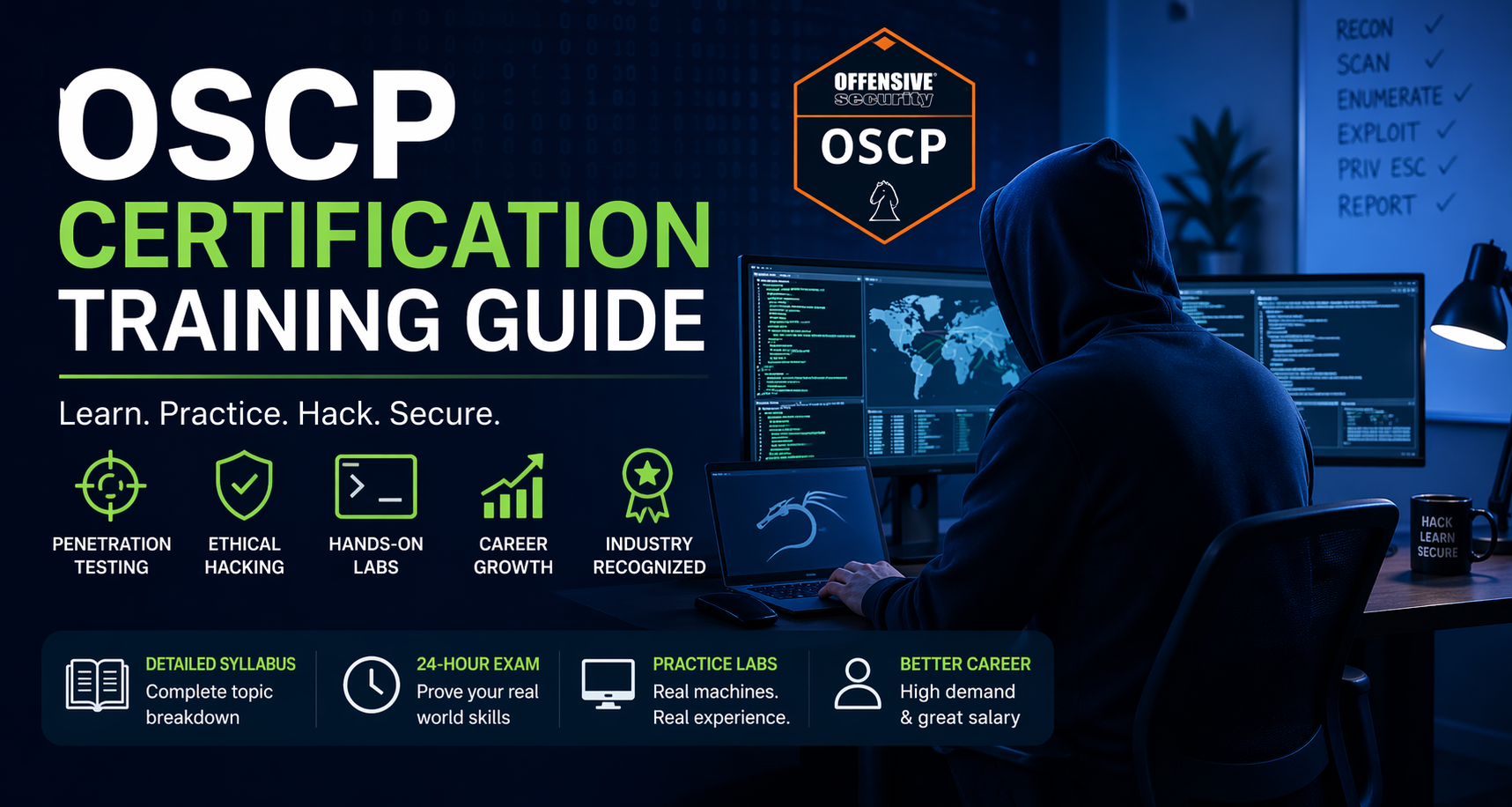
The OSCP (Offensive Security Certified Professional) is one of the most challenging and respected certifications in cybersecurity. Many candidates struggle on their first attempt, but with the right preparation, you can pass on your first try.
1. Build a Strong Foundation
Before starting the PWK course, ensure you have basic knowledge of:
- Linux command line
- Networking fundamentals
- Basic scripting (Python/Bash)
- Windows operating systems
2. Master the Lab Methodology
The lab is where you'll spend most of your time. Follow this methodology:
Step 1: Reconnaissance
Use nmap, masscan, and other tools to discover hosts and services.
Step 2: Enumeration
Go deep into each service. Check for default credentials, outdated versions, and misconfigurations.
Step 3: Exploitation
Try multiple vectors. If one doesn't work, move to the next. Document everything.
Step 4: Privilege Escalation
After getting initial access, focus on elevating privileges. Check SUID binaries, kernel exploits, and misconfigured services.
3. Time Management Tips
The 24-hour exam requires excellent time management:
- First 4 hours: Enumeration and initial foothold
- Next 12 hours: Exploitation and privilege escalation
- Last 8 hours: Documentation and verification
Pro Tip: Take breaks every 4 hours. Your brain needs rest to think clearly.
4. Documentation is Key
Start documenting from the moment you begin. Include:
- Screenshots of each step
- Commands used with explanations
- Reasoning behind your approach
- Proof files and flags
5. Common Mistakes to Avoid
- Moving too fast without proper enumeration
- Ignoring low-hanging fruits like default credentials
- Not taking breaks during the exam
- Poor documentation leading to incomplete reports
Conclusion
Passing OSCP requires dedication, practice, and the right mindset. Follow this guide, stay persistent, and you'll join the ranks of certified OSCP professionals. Good luck!